
Outdoor timber projects can transform the way you use your home. A well-designed timber deck, pergola, privacy screen or outdoor structure can create a comfortable space for entertaining, relaxing and enjoying the outdoors.
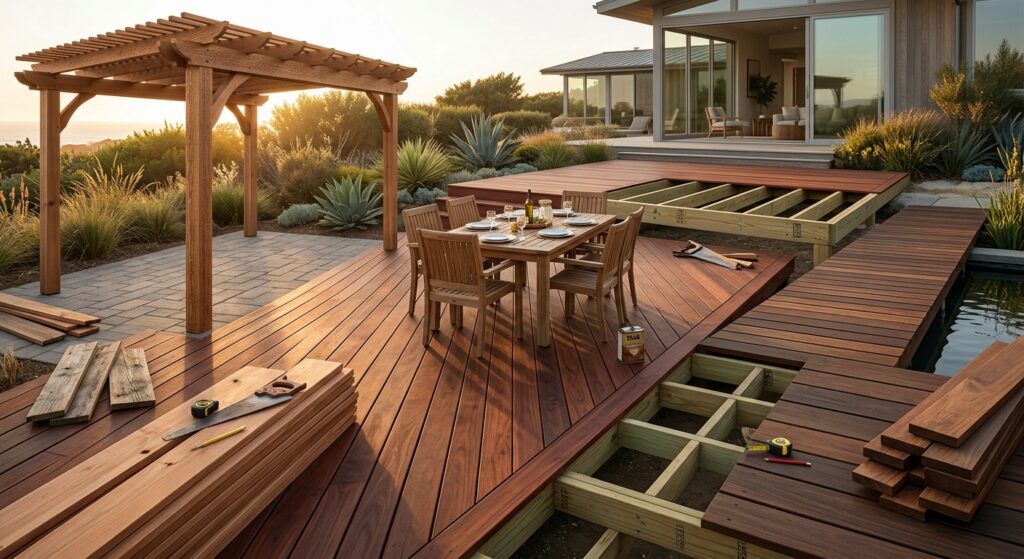
However, choosing the right timber is particularly important in coastal NSW.
Homes near the coast can experience higher exposure to moisture, rain, strong sunlight, humidity and salt-laden air. These conditions can affect how outdoor timber performs over time, making durability, construction details and ongoing maintenance important considerations.
So, what is the best timber for outdoor projects in coastal NSW?
The answer depends on the type of project, how exposed the timber will be and how much maintenance you are prepared to undertake.
At The Sydney Carpenters, we work with homeowners on outdoor carpentry projects including timber decks, pergolas, screening and other timber structures. Understanding the characteristics of different timber options can help you make a more informed decision before starting your project.
Why Timber Selection Matters in Coastal NSW
Timber used outdoors is exposed to conditions that do not affect indoor timber in the same way.
Rain and humidity can introduce moisture, while sunlight can gradually change the appearance of exposed timber. Coastal locations can also experience airborne salt, which makes the selection of suitable fixings and construction details especially important.
Durability is therefore one of the most important factors to consider.
Australian timber durability classifications distinguish between different levels of natural resistance. For exposed decking, WoodSolutions recommends naturally durable Class 1 or 2 timber, or appropriately treated timber such as H3-treated products for above-ground applications.
The right timber, however, is only one part of the equation. Good drainage, ventilation, appropriate spacing, suitable fixings and regular maintenance all contribute to the long-term performance of an outdoor timber structure.
Spotted Gum
Spotted Gum is one of the popular Australian hardwood options for outdoor applications.
It is naturally durable and is commonly used for decking and other exterior timber projects. Its strength and attractive grain also make it suitable for homeowners who want an outdoor area that combines durability with a natural appearance.
Spotted Gum can work particularly well for:
- Timber decking
- Outdoor stairs
- Pergola elements
- Screening
- Outdoor structures
- Other exposed timber applications
Its natural characteristics make it an option worth considering for coastal homes, although the exact suitability depends on the project’s exposure, construction details and specification.
Blackbutt
Blackbutt is another Australian hardwood commonly used for outdoor applications.
It is known for its strength and relatively good natural durability, making it suitable for a range of exterior building and carpentry applications.
Blackbutt can be considered for:
- Decking
- Outdoor structures
- Screening
- Stairs
- Exterior timber features
Its appearance can vary depending on the timber selected and how it is finished. As with any natural timber, homeowners should consider how the colour and appearance may change as the timber weathers.
Ironbark
Ironbark is valued for its exceptional density, strength and natural durability.
It can be a strong choice for outdoor projects where durability is a major consideration. However, its density can also make it more demanding to work with than some other timber species.
Ironbark may be suitable for projects such as:
- Heavy-duty decking
- Outdoor structures
- Stairs
- Structural timber elements
- Other applications where durability is important
For coastal construction, the overall design and fixing system still need to be considered alongside the timber species.
Tallowwood
Tallowwood is another durable Australian hardwood that can be considered for outdoor applications.
Its natural durability makes it suitable for exposed environments, while its appearance can complement both contemporary and traditional outdoor designs.
Tallowwood may be used for:
- Decking
- Outdoor entertaining areas
- Stairs
- Screening
- Other exterior carpentry projects
The best choice will depend on the project’s design, exposure, budget and preferred appearance.
Treated Pine
Hardwoods are not the only option for outdoor timber projects.
Treated pine can provide a more cost-effective alternative when the correct treatment level is specified for the intended application.
For exposed above-ground applications, H3 treatment is commonly relevant. For timber in or very close to the ground, higher levels of protection may be required depending on the application and conditions.
Treated pine can be used for applications such as:
- Pergola framing
- Outdoor structures
- Screening
- Deck framing
- Fencing and related outdoor work
The important point is that not all treated pine products are interchangeable. The treatment level needs to match the exposure and intended use.
Which Timber Is Best for Coastal Decking?
When choosing timber for a coastal deck, durability should be one of the first considerations.
Naturally durable hardwoods such as Spotted Gum, Ironbark and Tallowwood can be suitable options for exposed decking, while Blackbutt is another commonly considered Australian hardwood.
Treated timber can also be appropriate when the correct treatment level is specified.
However, there is no single timber species that is automatically the best choice for every coastal deck.
The right option depends on:
- How close the property is to the coast
- Exposure to rain and salt-laden air
- Deck height
- Ventilation
- Ground clearance
- Expected foot traffic
- Desired appearance
- Budget
- Maintenance expectations
A timber deck should also be designed to allow water to drain and air to circulate. WoodSolutions recommends appropriate board spacing to help water flow between boards and improve ventilation.
Timber for Coastal Pergolas
Pergolas have different requirements from decking because much of the timber may be elevated and positioned above ground.
This does not mean timber selection can be overlooked.
The structural components of a pergola need to be suitable for their intended exposure and application. Posts, beams, rafters and other components should be specified according to their location and the relevant durability or treatment requirements.
A well-designed pergola should also consider:
- Water drainage
- Ventilation
- Connections
- Fixings
- Exposure to sunlight
- Protection from prolonged moisture
- Future maintenance
For coastal properties, the fixings are also important. WoodSolutions recommends stainless steel fixings for connections in coastal zones within 1 km of the coast.
Timber Decking vs Composite Materials
Timber is not the only material available for outdoor areas.
Composite decking is another option for homeowners who want a different appearance or maintenance profile.
Natural timber, however, offers characteristics that many homeowners prefer, including:
- Natural grain and texture
- A warm appearance
- A wide choice of species
- The ability to be sanded and refinished
- A natural connection with landscaped outdoor spaces
Composite products can provide different benefits, so the best choice ultimately depends on your design preferences, budget and expectations for maintenance.
If you prefer the look and feel of natural timber, selecting a suitable species and having it properly installed can help create an outdoor area that performs well for years.
Does Coastal Timber Need Maintenance?
Yes.
Even naturally durable timber will weather when it is exposed to the elements.
Over time, outdoor timber may change colour and develop a silver-grey appearance. This is a natural weathering process and does not necessarily mean the timber has failed.
Maintenance requirements depend on the timber species, finish, exposure and desired appearance.
Maintenance may include:
- Cleaning the timber
- Removing dirt and debris
- Checking drainage
- Inspecting fixings
- Checking for signs of deterioration
- Recoating or oiling when required
- Keeping the area well ventilated
The more exposed the timber is, the more important regular inspection becomes.
Good detailing and maintenance can make a significant difference to timber performance. WoodSolutions notes that poor ventilation, trapped moisture and concealed joints can accelerate deterioration even in naturally durable timber.
Coastal Timber Requires More Than the Right Species
Choosing a durable timber is important, but it is only one part of creating a long-lasting outdoor structure.
The way timber is designed and installed can have a major impact on its performance.
A good outdoor timber project should consider:
Drainage
Water should have a clear path away from the timber rather than becoming trapped around joints or connections.
Ventilation
Allowing air to circulate around timber can help reduce prolonged moisture exposure.
Board Spacing
Appropriate spacing between decking boards allows water to drain and helps ventilation.
Suitable Fixings
Coastal environments can increase corrosion risk, so fixings need to be selected for the exposure conditions.
Ground Clearance
Timber close to or in contact with the ground requires greater durability or appropriate treatment.
Ongoing Maintenance
Regular cleaning, inspection and maintenance can help identify problems before they become more serious.
Choosing Timber for Your Outdoor Project
There is no universal answer to the question of which timber is best for coastal NSW.
For many outdoor projects, durable Australian hardwoods such as Spotted Gum, Blackbutt, Ironbark and Tallowwood can provide attractive and durable options. Treated timber can also be appropriate when the treatment level is correctly matched to the application.
The most suitable choice depends on the project itself.
A timber deck exposed to coastal weather may have different requirements from a covered pergola, privacy screen or outdoor staircase. The location, construction method, ground clearance and expected maintenance all need to be considered.
Outdoor Carpentry for Coastal NSW Homes
At The Sydney Carpenters, we understand that outdoor timber projects need to be designed around the property as well as the homeowner’s requirements.
Our outdoor carpentry services can include:
- Timber decking
- Pergolas
- Outdoor stairs
- Privacy screens
- Timber structures
- Deck repairs and replacements
- Custom outdoor carpentry
If you are planning a new deck, our timber deck building services can help you explore suitable options for your property.
For homeowners considering a covered outdoor area, our pergola building services provide another way to create a functional outdoor living space.
You can also explore our residential carpentry services for a broader range of carpentry work around your home.
Build an Outdoor Space That Lasts
The best timber for an outdoor project is not simply the most expensive or hardest species available. It is the timber that is appropriate for the project’s exposure, design, structural requirements, appearance and maintenance expectations.
For coastal NSW homes, durability should be considered alongside good construction practices. Proper drainage, ventilation, suitable fixings and regular maintenance can all contribute to the long-term performance of an outdoor timber structure.
Whether you are planning a new deck, pergola, outdoor stairs or another timber feature, choosing the right materials at the beginning can help you create an outdoor space that looks great and works for your home.
Contact The Sydney Carpenters to discuss your outdoor timber project and find a suitable carpentry solution for your Sydney home.